
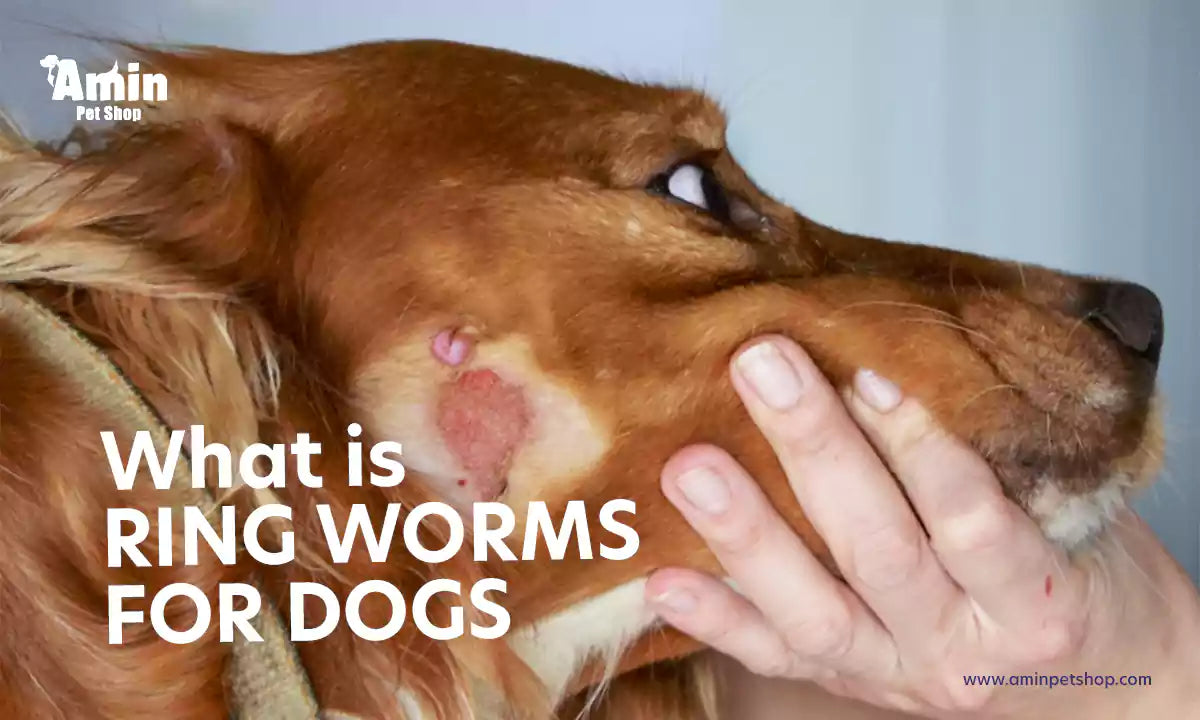
Ring worms for dogs, is a common fungal infection worldwide that affects almost all pets. It is a highly contagious disease that infects dogs, cats, and any animal through direct contact with contaminated surfaces or infected animals or humans. Given the importance of ringworm in dogs, we will discuss in this article everything that dog owners need to know, including the causes of ringworm in dogs, its symptoms, as well as how to treat it.
What is ring worms for dogs?
Ringworm in dogs is a fungal infection that can affect the skin, hair, or nails. The most common fungi causing the disease are Microsporum and Trichophyton. These fungi feed on dead hair and skin cells, and although ringworm is more common in cats, it also occurs in dogs.
Young, elderly, and long-haired dogs are more affected, and the infection appears on the feet, head, and ears of dogs most frequently, but it can appear on any part of the body as well.
Causes and Risk Factors of Ringworm in Dogs:
The fungus responsible for ring worms for dogs can remain alive but dormant on surfaces and carpets for up to 18 months, and is usually spread through the loss or breakage of infected hair. The most important causes of the ring worms for dogs are the following:
- Direct contact with the fungus, through direct contact between the dog and the infected animal or person.
- Touching contaminated surfaces such as a comb, bedding, or food bowls.
- Dogs dig in the dirt, especially in warm and humid environments, as ringworm fungi live in the soil.
- If your dog has an open wound, new scratches, or fleas, he will be more susceptible to infection, as healthy, intact skin acts as a protective barrier.
- Dogs with weak immune systems, such as puppies and elderly dogs, as well as dogs that suffer from diseases that weaken the immune system, or any skin diseases, become more susceptible to infection.
- ringworm in dogs occurs when the fungus attaches to damaged skin, and infected areas on the skin and symptoms appear about 1 to 3 weeks after infection.
Signs and symptoms of ringworm:
Ringworm in dogs usually appear as hairless areas that are roughly circular. As the fungus multiplies, it may become irregular in shape and spread throughout the dog's body. Hair may begin to grow again in the middle. Affected hair strands are also brittle and easy to break.
Impetigo does not usually itch, but sometimes it becomes inflamed. In most cases, alopecia areata spots appear spread throughout the body. Occasionally a nail fungal infection may occur where the claws become rough, brittle and broken.
Some dogs may become infected with ringworm fungi in their hair or skin without showing any clinical signs of disease. These dogs can spread ringworm to other animals or people even though there are no obvious skin lesions, and they are called “asymptomatic carriers.”
Asymptomatic carriers are particularly problematic in multi-animal settings such as animal shelters or kennels where they can spread the ringworm fungus to many other animals and people without showing any clinical signs.
How Is Ringworm in Dogs Spread?
- Ringworm in dogs is contagious and is transmitted through direct contact with the fungus.
- Ringworms for dogs can be transmitted by direct contact with an infected animal or person
- May be transmitted by handling contaminated objects or touching contaminated surfaces.
- Fungal spores remain dormant on combs, brushes, food bowls, furniture, bedding, carpets, or other environmental surfaces for several months (reportedly up to 18 months).
- Exposure to the ring worms for dogs does not always result in infection.
- Older adults, young children, and adults with a weakened immune system or skin allergies are more susceptible to ringworm.
Note; If your child has a ringworm, he or she may have acquired it from your pet or another child at school. If you or a loved one has suspicious skin lesions, consult your family doctor immediately.

Diagnosing ringworm in dogs:
Diagnosis of ring worms for dogs is made in the following way:
1-The presence of the typical “ringworm” appearance on the skin
This method is not very accurate and may lead to misdiagnosis. Additional diagnostic tests are usually needed to confirm the presence of ring worms for dogs.
2-Affected hair glows under a special ultraviolet light known as a Wood's lamp
Most cases of canine ringworm caused by some species of fungi glow a yellowish-green color when the skin is examined in a dark room with a Wood's lamp. But there are some fungi that are not accompanied by any glow. While this technique is accepted in some cases as a rapid screening tool in multi-animal facilities, the diagnosis made on a Wood's lamp evaluation is not always reliable.
3-Fungal culture of a sample of hair or skin cells
The presence of fungi can sometimes be confirmed by fungal culture within two days, but in some cases, fungal spores may be slow to grow, and culture results may take up to four weeks. Therefore, it cannot be said that a suspected sample is negative before at least a month has passed. There are many causes of hair loss in dogs. Before making a diagnosis of ringworm, your veterinarian may recommend additional tests to rule out some of these causes.
4-PCR test
This is the latest test for diagnosing ringworm in dogs and is faster than fungal culture, and you can get confirmed results within 3 to 5 days. This test relies on looking for the DNA of parasites in your dog's hair, but it cannot distinguish between the DNA of living and dead parasites.
Therefore, the PCR test cannot be used to monitor the disappearance of fungi from the dog's hair, but fungal culture can be used to monitor the complete resolution of the infection.
How Do Dogs Get Ringworm?
ring worms for dogs feed on keratin found in the outer layers of skin, hair and nails. This fungus usually infects hair follicles in dogs, causing the affected hair strands to break off at the skin line. ring worms for dogs usually appear as hairless areas that are roughly circular. As the fungus multiplies, it may become irregular in shape and spread throughout the dog's body. Hair may begin to grow again in the middle. Affected hair strands are also brittle and easy to break.
Impetigo does not usually itch, but sometimes it becomes inflamed. In most cases, alopecia areata spots appear spread throughout the body. Occasionally a nail fungal infection may occur where the claws become rough, brittle and broken.
Some dogs may become infected with ringworm fungi in their hair or skin without showing any clinical signs of disease. These dogs can spread ringworm to other animals or people even though there are no obvious skin lesions, and they are called “asymptomatic carriers.”
Asymptomatic carriers are particularly problematic in multi-animal settings such as animal shelters or kennels where they can spread the ringworm fungus to many other animals and people without showing any clinical signs.
What does ringworm look like on a dog?
Symptoms of ring worms in dogs can include hair loss – sometimes in ring-shaped patches – and scaly skin. The affected areas can include any part of the skin, but the feet, face and ears seem to have a greater tendency to this condition. Other ring worms for dogs symptoms to look for include:
- Gray and scaly patches.
- Red areas on your dog's skin.
- Raised patches of skin that may leak.
- Ringworm infection can also lead to nail inflammation, and your dog's claws can become brittle and break easily. The infection may or may not cause itching.
Treatment Options for Ringworm:
Fortunately, ring worms for dogs can be treated by following your veterinarian's instructions, and using a combination of quarantine, topical treatment, systemic treatment as well as eliminating environmental contamination is the most common and successful method.
If there is more than one pet in your home, they should all be treated at the same time to control the infection. Your veterinarian recommends continuing treatment without stopping, so do not stop treatment too early as this may lead to the fungus appearing again.
Bathing is an important part of the treatment steps as it kills fungal spores on the dog's fur and helps prevent further environmental contamination. This is because the hair that is treated is not contagious when it falls out, and the steps for treating ringworm in dogs include the following:
1.Quarantine
Because ring worms for dogs is a highly contagious disease, the suspected dog must be immediately isolated in quarantine and kept away from other pets. This is the first method of treating ringworm in dogs. Likewise, avoid contact with humans, and it is best to isolate the infected dog in an easy-to-clean room without carpets or wooden floors, such as a large bathroom. You can also learn about treating heartworms in dogs.
2.Topical treatment
Another way to treat ring worms for dogs is to use topical treatment, which consists of using an antifungal shampoo like omni gaurd anti parasitic shampoo that is used with an antiseptic such as chlorhexidine, to obtain satisfactory results and must be used twice a week. Lemon sulfur dip: This method is very effective, but it has a very unpleasant smell, so dog owners prefer to do it under the supervision of a doctor in the veterinary clinic. Creams and ointments that contain miconazole or clotrimazole are applied to the affected areas.
The doctor does not usually recommend shaving very large dogs to avoid skin wounds, which make dogs more susceptible to infection, but the hair can be cut in one or two small areas by grooming dog tools to speed up treatment, and the duration of local treatment ranges for weeks or several months.
3.Oral treatment
The third type of method for treating ring worms for dogs is oral treatment like nexgard for dogs . It is preferable to combine topical treatments with oral treatments, and this method is the most common. These oral medications make the fungi unable to multiply and spread. The most commonly used medication is griseofulvin, and there is also the medication itraconazole. Dogs' response to these medications varies, and treatment continues for at least 3 weeks and can continue for longer.
Recommended Products from Amin Pet Shop for Ringworm Treatment:
Alongside veterinary care, choosing the right medicated shampoo can help speed up healing and limit the spread of fungal spores around the house. Amin Pet Shop stocks a range of trusted medicated skin-care products and long lasting flea and ticks treatment for dog owners in Egypt:
- Virbac Pyoderm Shampoo 250ml: a dermatological shampoo with 3% chlorhexidine that has combined antibacterial and antifungal action, typically used 2–3 times a week as directed by a vet; one of the closest available products for ringworm-related skin care.
- Full Virbac medicated range: additional medicated shampoos and skin treatments (like Sebolytic) for dogs with sensitive skin or recurring dermatological issues.
- Dog Grooming & Healthcare collection: complementary hygiene products to help reduce environmental contamination during treatment.
- Dog Flea & Tick Treatments collection: since flea bites and skin wounds make dogs more susceptible to fungal infection, parasite prevention is an important part of protecting your dog's skin.
Always consult your veterinarian before starting any medicated shampoo or treatment, to confirm the right product and dosage for your dog's specific condition.
What happens if ringworm goes untreated in dogs?
ringworm in dogs can go away on its own, but it will take longer than treating the infection. Your dog will also be uncomfortable and contagious for a longer period of time without treatment.
Untreated ringworm in dogs can spread to all of their skin. However, this is rare. ringworm in dogs can also come back if it is not treated properly the first time.
How to Disinfect Your Home and Pet’s Environment?
Infected hair contains many microscopic fungal spores that can be shed into the environment. Infection of other animals and humans can occur, either through direct contact with an infected dog or through contact with fungal spores in a contaminated environment. In addition to minimizing direct contact with infected dogs, it is also important to keep the environment as germ-free as possible.
Trimming the hair (carefully disposing of it) combined with topical antifungal treatment of affected areas of skin may help reduce environmental contamination. Pet hair should be removed from floors or furniture because it may be contaminated with fungal spores. It is helpful to limit your dog to rooms of the house that are easy to clean.
Fungal spores can be killed with a solution of chlorine bleach and water using a dilution of a pint of chlorine bleach (500 ml) in a gallon of water (4 liters), or a dilution of 1:10 to 1:100. In multi-animal facilities such as animal shelters or kennels, treating ringworm can be very difficult and expensive, and environmental contamination can be difficult to contain.

How do you prevent ringworm from spreading?
Here some steps which will help you to get rid of ringworm in dogs;
Step1:
Dogs may be infected without showing any symptoms and transmit it to any pet or to humans. Therefore, when any pet is diagnosed with the infection, all other animals in the house must be examined, as they may also be infected.
Step2:
Continue treating ringworm in dogs without stopping according to the veterinarian’s instructions. The duration of treatment usually lasts from weeks to months, and a fungal culture must be performed every two to three weeks from the start of treatment.
Step3:
The infection can be transmitted from humans to your pet friend, so if you notice any symptoms in a family member, you should remove your pet and go to your doctor immediately for examination.
Step4:
Dogs and outdoor animals must undergo a comprehensive medical examination from a veterinarian before living with domestic animals.
Step5:
Do not allow your dog to dig outside to avoid contracting ringworm from the soil, especially if you live near wildlife. You should keep the house vacuumed regularly, and dispose of the vacuum bag afterward.
Step6:
ringworm in dogs can also be prevented by using effective disinfectants to clean surfaces and clothing that your infected dog touches.
Step7:
Maintain healthy skin for your dog, to avoid infection, and conduct examinations at the veterinarian twice a year to detect ringworm or any other infection.
Step8:
You can also prevent ringworm in dogs by isolating the infected animal from other animals, wearing gloves when applying topical treatments, and using antifungal shampoo to prevent reinfection.
How Long Does It Take to Treat Ringworm in Dogs?
The vast majority of dogs, if treated appropriately, will recover from ringworm infection. Symptoms may recur if treatment is stopped too early or if the pet has an underlying disease that compromises the immune system.
Symptoms may also recur sometimes because the dog is a carrier of ringworm.
When to See a Vet for Ringworm?
The majority of dogs usually recover if treated well and in a timely manner, but if treatment is stopped suddenly, if only topical treatments are used, or if the dog suffers from a disease that affects its immunity, symptoms may reoccur. Sometimes the infection persists despite proper treatment, and the doctor may need to use alternative antifungal medications.
Conclusion
At the end of our article, we have explained everything that dog owners need to know about ring worms for dogs. We have discussed together the causes as well as the symptoms of ring worms for dogs, and we have listed in detail how to treat it from Amin Pet Shopas well as the prevention methods that must be followed to avoid the occurrence of the disease as much as possible.
FAQ
Can humans get ringworm from dogs?
Yes. Ringworm is a contagious fungal infection that can spread from dogs to humans through direct contact with an infected animal or contaminated objects. Anyone can become infected, but young children, older adults, and people with weakened immune systems are at a higher risk. In humans, ringworm typically appears as a circular, red, itchy rash, so you should consult a doctor if symptoms develop after contact with an infected dog.
How long will a dog with ringworm remain infectious?
Dogs with ringworm usually remain contagious for about three weeks when they receive aggressive treatment. Without proper treatment or if the treatment plan is not followed correctly, the infection can last much longer. During this period, it's best to limit contact with other pets and household members to reduce the risk of spreading the fungus.
How long does it take for ringworm lesions to appear?
The incubation period for ringworm in dogs is typically between 7 and 14 days after exposure. However, in some cases, it may take up to 21 days before visible signs such as hair loss, scaling, or circular skin lesions appear.