
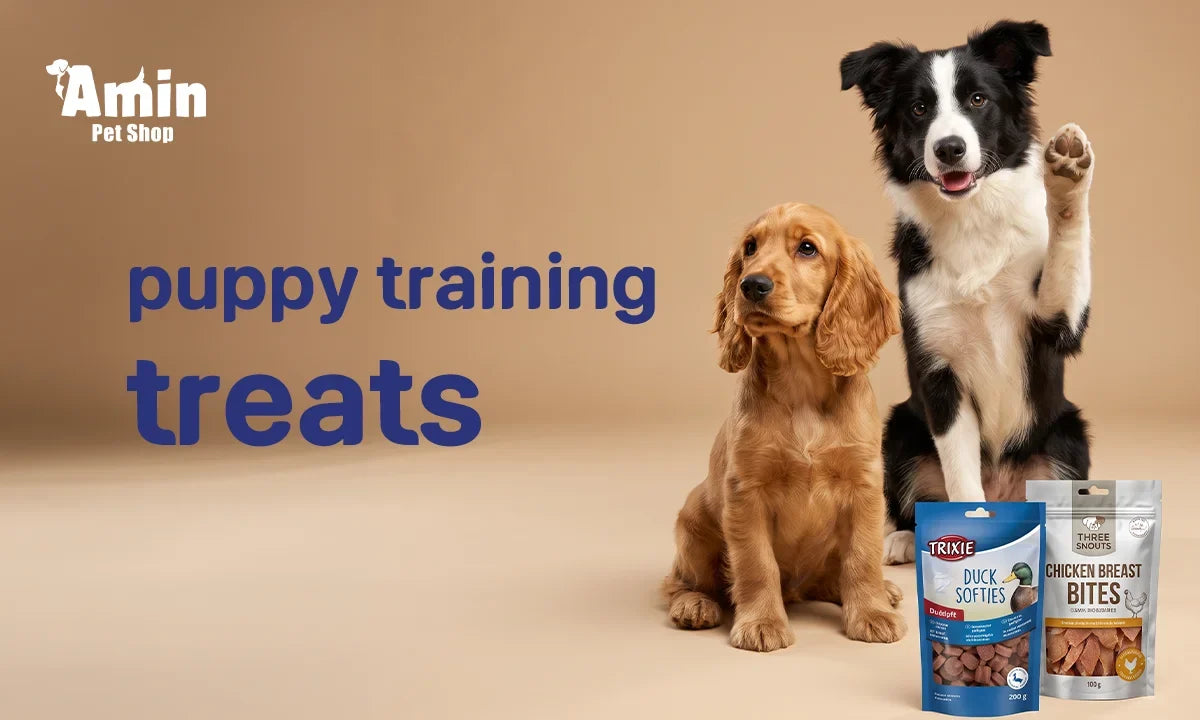
The right training puppy training treats aren’t just a snack, it's a tool. It's the thing that turns "sit" from a confusing noise into a behavior your puppy genuinely wants to repeat. At Amin Pet Shop, we've watched enough first-time puppy owners go through this exact moment to know it's worth getting right from day one, and that's what this guide is here to help with.
Puppy Training Treats for Positive Reinforcement:
Positive reinforcement is, at its core, pretty simple: your puppy does something good, something delicious shows up immediately after, and the behavior gets repeated. No leash yanking, no raised voices, just timing and a treat your dog actually wants. The trick is that the puppy training treats have to be worth the effort. A puppy distracted by a squirrel outside the window isn't going to break focus for a stale, flavorless pellet.
This is where quality matters more than quantity. A handful of dehydrated chicken breast pieces will get a reaction a generic biscuit never will, simply because it smells and tastes like real meat. Once your puppy associates "doing the thing" with "getting the good stuff," training stops being a chore for both of you and starts being something your puppy actually looks forward to.
The Role of Treats in Building Good Puppy Habits:
Dog training treats aren't just about teaching tricks, they're how a puppy learns which habits earn attention and which ones don't. Every time you reward calm behavior at the door instead of jumping, or reward a puppy for settling on their bed instead of begging at the table, you're quietly shaping their personality for the next decade.
Consistency is everything here. If puppy training treats only show up occasionally or the rules keep changing, your puppy gets confused about what's actually being rewarded. Keeping a steady stock of reliable treats means you're never improvising with whatever's in the cupboard, and your puppy gets a clear, repeatable signal every single time.

Best Puppy Training Treats for Different Training Stages:
What works as a reward for your puppy at eight weeks won’t necessarily work at eight months, their needs shift, and your treat choices should shift with them.
In those earliest weeks, go for something small and easy on the mouth. Soft, manageable pieces your puppy can chew without a struggle. Bring in new puppy training treats gradually, one at a time, and pay attention to how their stomach handles each one.
-
Once the real learning kicks in, sit, stay, come, you’ll want something you can hand over quickly and often. Training sessions move fast, and fumbling with a treat bag breaks the rhythm.
-
Later on, when you’re working in a park or a busy street, the stakes go up. A treat that thrills them indoors might get ignored the moment a pigeon walks by. That’s when you need something genuinely hard to resist.
One product worth trying from Amin Pet Shop is Three Snouts -Chicken Breast Bites. Small pieces, real chicken, and listed as appropriate for puppies and smaller breeds, which makes them a reasonable fit for short, reward-heavy sessions. That said, look over the feeding directions and confirm the product suits your puppy’s specific age before making it a regular part of training.
Small Treats for Quick and Effective Puppy Rewards:
Size matters more than most new owners expect. A treat that takes ten seconds to chew breaks your puppy's attention and slows the whole session down. The goal is a reward your puppy can eat in one bite without looking away from you.
Halawyat dehydrated chicken breast puppy treat are a solid pick here, they snap into small, pea-sized pieces easily, which means one pack stretches across several sessions without overfeeding. Keep a few pieces in a treat pouch or your pocket so rewards happen the instant the behavior does, not five seconds later.
Choosing Puppy Training Treats Based on Ingredients:
Puppies have sensitive digestive systems, and training treats often get used far more often than regular snacks, so ingredient quality matters even more here than in a once-a-day treat.
Look for short ingredient lists, ideally a single protein source with nothing artificial added.
Single-ingredient options like Halawyat Dehydrated Raw Chicken Breasts for Dogs: skip fillers, additives, and artificial flavoring entirely, just real protein, dehydrated to lock in the smell dogs respond to.
Reading the back of the pack is a two-second habit that pays off in fewer upset stomachs and a puppy that's actually excited by what's in your hand, rather than treats bulked up with grain or sugar.
High Value Treats for Difficult Training Sessions:
Not every treat needs to be exciting but some absolutely do. "High-value" simply means the treat your puppy would choose over almost anything else, reserved for the hard stuff: recall near distractions, ignoring another dog, or holding a stay while the doorbell rings.
This is where something like Gosbits Objective Chicken&Potato Puppy Dogs earns its keep. It's rich, strong-smelling, and not something your puppy gets every day, which is exactly what keeps it special. Save it for the moments training actually gets hard, and your puppy will start working harder to earn it.
How to Use Treats Without Overfeeding Your Puppy?
Since puppies are still building their bodies, treats should complement what they eat, not crowd out the balanced meals they actually need to grow.
A good rule of thumb is to keep treats at roughly 10% of your pup’s daily calories, with the bulk coming from a well-rounded, complete diet. That said, every puppy is different. If yours is particularly small, over or underweight, or eating a specialized diet, your vet is the best person to guide you.
To keep puppy training treats portions in check:
-
Cut treats into tiny pieces for training sessions.
-
Factor those training bites into the day’s total food allowance.
-
Pull back on other snacks on days when treats are flowing more freely.
-
Don’t hand out treats idly, save them for when your pup is actually learning something.
-
Always keep a bowl of fresh water within reach.
One simple trick: swap some treats for pieces of your puppy’s regular kibble during training. It keeps them motivated without throwing their daily intake off balance.
Building a training treat kit? Browse the full range of treats on Amin Pet Shop, with same-day delivery across Cairo & Giza for orders placed before 1 PM.
Shop the Treats Collection
Puppy Training Treats for Basic Commands:
Snacks go a long way when you’re working on the basics, just make sure every reward lines up with a clear signal and steady expectations.
-
Sit: Bring a treat up close to your pup’s nose, then slowly lift it. Their rear end will follow. The moment their bottom hits the floor, hand over the treat, then start adding the word.
-
Come: Pick a calm spot and don’t start too far away. Call them over with some excitement in your voice, and make a fuss when they actually show up. You want them to feel like coming to you is the best decision they’ve ever made.
-
Stay: Get them sitting, hold still for just a beat, then reward them with puppy training treats for not moving. Work up to longer stretches slowly, don’t jump straight to expecting them to hold it for a whole minute.
-
Leave it: You’re teaching them to pull their attention away from something and look at you instead. When they do, swap it out for something better.
-
Leash walking: Give them a treat when they glance back at you or stick close without dragging you forward. Practice somewhere boring before you try a busy street.
Short sessions work best. If your pup starts zoning out or getting restless, wrap it up and come back to it fresh.
Treat Timing and Portion Control During Training:
Timing is arguably more important than the treat itself. Reward delivered more than a second or two after the behavior teaches your puppy the wrong thing entirely, often whatever they happened to be doing at the moment the treat appeared, not the behavior you were after.
Keep puppy training treats pre-broken and within easy reach before a session starts, rather than fumbling with packaging mid-command. And track rough portions across the day: a handful of small pieces from puppy training treats goes a long way, so there's rarely a need to open a second bag in one sitting.
Healthy Reward Options for Puppies:
Not every treat on the shelf is actually made with puppies in mind. The right pick comes down to how old your pup is, what their body needs, and whether they can handle the texture without a struggle.
Amin Pet Shop carries a few options that are worth a closer look:
-
Three Snouts -Chicken Breast Bites: Small, easy-to-eat chicken pieces that work well for puppies and petite breeds alike.
-
Halawyat dehydrated chicken breast puppy treat: One of the few options in the range that’s actually labeled for puppies. Still worth pulling up the product page to confirm age guidance before buying.
-
Royal Canin Mini Exigent Dry food for small: Compact treats built for training moments. Double-check the age recommendation on the packaging before handing these to a young pup.
Building a training treat kit? Browse our full range of Dog Treats at Amin Pet Shop, from small, soft rewards for everyday repetition to richer high-value options for tougher sessions, with same-day delivery across Cairo & Giza for orders placed before 1 PM
Finding the Right Puppy Training Treats for Your Dog:
Every puppy is a little different. Some will work for anything; others only perk up for something rich and meaty. Finding your puppy's "currency" takes a bit of trial and error, and it's worth testing a few options early rather than assuming one treat fits every dog.
Amin Pet Shop carries the Halawyat and Scooby Chew ranges specifically because they cover that spectrum, from everyday small rewards to richer, high-value options for tougher training moments, all available with same-day delivery across Cairo and Giza, so you're never stuck mid-training-plan waiting on a shipment.
Conclusion:
Training a puppy is less about discipline and more about communication, and puppy training treats are one of the clearest languages a young dog understands. Pick small, high-quality rewards for everyday repetition, keep something special in reserve for the hard moments, and stay mindful of how much is going into that little stomach over the course of a day. Get those basics right, and the rest of training tends to fall into place a lot faster than you'd expect.
FAQs
What are the best treats for training a puppy?
The best training treats are small, soft, and high in protein, so your puppy can eat them in one bite without breaking focus. Single-ingredient dehydrated treats, like Halawyat’s chicken breast puppy treats, tend to be a smart pick. They snap apart into small bites easily, and because they’re simple in composition, they sit well with a young pup’s still-developing gut.
What is the 10-10-10 rule for puppy training?
Some trainers loosely follow a “10-10-10” rhythm, sessions that run about 10 minutes, each new cue repeated around 10 times, over roughly 10 days of short daily practice. It’s not written in stone, but it keeps things manageable and stops you from burning out a puppy’s focus before it even gets started.
At what age can you start training a puppy with treats?
Most pups are ready to pick up basic treat-based training around the 8-week mark, once they’ve had a chance to settle in and feel at home. Early sessions should stick to name recognition and sit, using very small, soft pieces suited to tiny jaws and sensitive stomachs.
What do dog trainers use for treats?
Most trainers carry two kinds: small, low-calorie pieces for everyday repetition, and a separate high-value treat saved for distractions or new behaviors. Single-ingredient dehydrated proteins, chicken, liver, and similar options, are common choices because they're easy to portion and genuinely exciting to a dog.

