
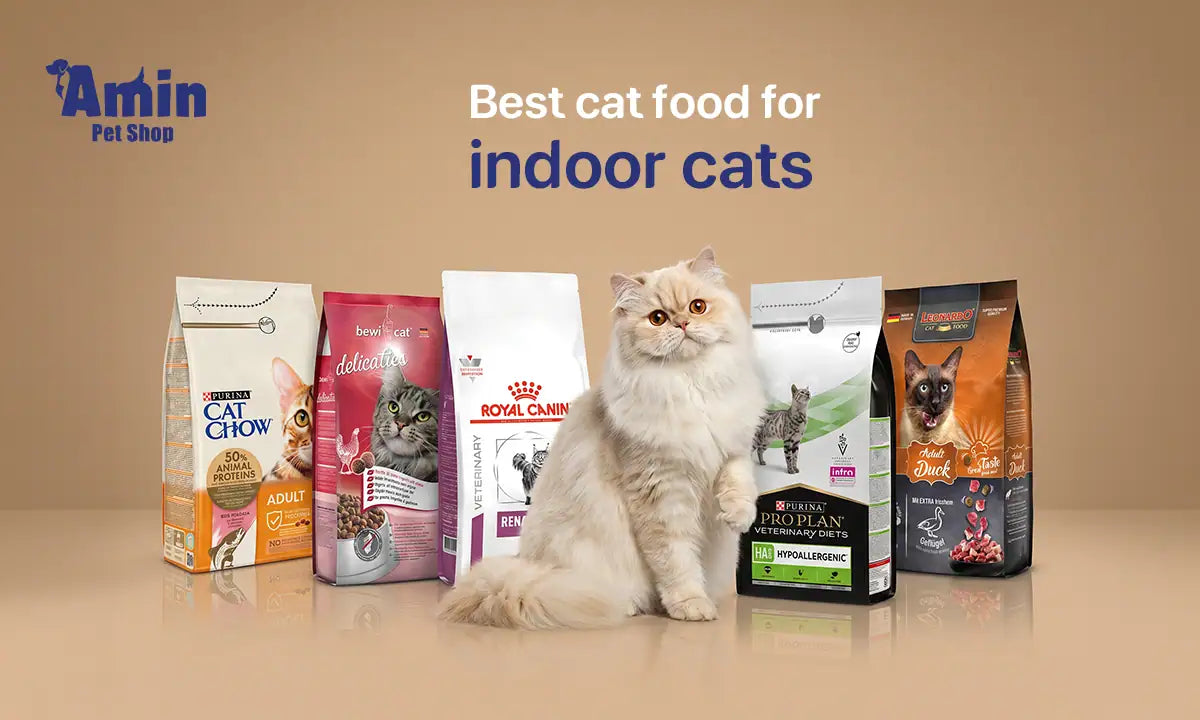
When looking for the best cat food for indoor cats, it isn't just a matter of selecting the most expensive bag or the fancy label. It's about matching what's in the bowl to how your cat actually lives. This guide breaks down everything from protein content and moisture to grain-free choices, so you can feel confident every time you fill that dish. And if you're looking for the best cat food Egypt has to offer, Amin Pet Shop has you covered.
Nutritional Needs of Indoor Cats
Cats are obligate carnivores, they biologically require nutrients that only come from animal tissue. High-quality protein is a given and it is a staple. But indoor cats have a few additional considerations on top of that baseline:
- High Protein: At least 30–40% of calories should come from quality animal protein like chicken, turkey, or fish.
- Moisture: Cats have a low thirst drive. Wet food or moisture-rich kibble keeps kidneys healthy long-term.
- Controlled Carbs: Indoor cats burn fewer calories. Choosing lower-carbohydrate foods will help your cat avoid putting on weight and keep blood sugar levels stable.
- Taurine & Omega-3s: An essential nutrient for the heart, eyes, and fur. Look for these on every label.
Learn more about: best grain free cat food
Why Indoor Cats Need Special Food
A cat that spends all day indoors burns far fewer calories than one that hunts, climbs trees, or roams a garden. The result? Standard cat food formulas, designed with an active lifestyle in mind, can gradually tip an indoor cat toward obesity without any dramatic change in feeding habits.
Indoor-specific formulas are carefully calibrated with fewer calories per cup, more dietary fiber to support digestion and hairball control, and sometimes added L-carnitine to help the body metabolize fat more efficiently. They also tend to include more enrichment nutrients that compensate for the lower stimulation of an indoor environment.
Vet insight: Indoor cats are 40% more likely to become overweight than outdoor cats, according to feline nutrition research. Choosing a food formulated for their lifestyle is one of the simplest things you can do for their long-term health.
Learn more about: The best kitten dry food
Best Cat Food for Indoor Cats in Dry Form
Dry kibble works well for many indoor cats, it's convenient, economical, and promotes some dental friction that can reduce tartar buildup. When scanning labels, prioritize formulas where a named meat (chicken, salmon, turkey) appears as the very first ingredient. A good dry food should include:
- A real, clearly named protein — chicken, salmon, turkey, not a vague "meat meal."
- Fiber below 10%, since anything beyond that often means the formula is padded with cheap fillers.
- Gut support through prebiotics or probiotics.
- Fat somewhere in the 12–16% window for weight management.
- No artificial colors, added flavors, or chemical preservatives.
Read about: Royal Canin Kitten Food

Best Wet Cat Food Options
Many vets actually lean toward recommending wet food as the primary diet for indoor cats. Since cats evolved in arid climates, they get most of their hydration from prey, not a water bowl. Wet food mimics that naturally moisture-rich diet and does wonders for urinary tract health.
For the best wet cat food for indoor cats, look for:
- 70–80% moisture content.
- Real meat or fish as the primary ingredient.
- Minimal starchy fillers like potato or rice.
- Clear, broth-style formats (pâté and shreds both work well).
Mixing wet and dry food throughout the day is a popular approach — it gives cats variety while keeping costs manageable.
Read about: the Virbac Dry Food for Cats
Grain-Free vs Regular Cat Food
The grain-free debate comes up constantly in cat nutrition conversations, and the answer depends on the individual cat. Cats don't need grains — they're not a natural part of feline diets — but a well-made grain-inclusive formula using wholesome oats or brown rice isn't inherently harmful either.
| Factor | Grain-Free | Regular (Grain-Inclusive) |
|---|---|---|
| Protein Level | Typically higher | Moderate, varies by brand |
| Carbohydrate Level | Lower | Slightly higher |
| Good for Allergies? | Often yes | Depends on grain type |
| Cost | Usually higher | More budget-friendly |
| Best For | Sensitive stomachs, weight issues | Most healthy indoor cats |
If your cat shows signs of food sensitivity — loose stools, skin irritation, or excessive licking — grain-free is worth trying. Otherwise, focus more on protein quality than grain content.
Ingredients to Look for in Cat Food
Reading a pet food label can feel like decoding a foreign language. Here's what you genuinely want to find:
- Named animal protein first: "deboned chicken," "Atlantic salmon," "turkey meal."
- Taurine: non-negotiable for heart and eye health.
- DHA & EPA (Omega-3 fatty acids): for optimum hair & skin health while benefiting cognitive development.
- Vitamin E & C: natural preservatives and highly effective antioxidants.
- Probiotics: Lactobacillus strains give protection immunity and provide digestive support.
- L-carnitine: helps metabolize fat and keep lean muscle tissue.

Foods Indoor Cats Should Avoid
- Onions and garlic: toxic in any form, including powders used in flavored treats.
- Grapes and raisins: can cause acute kidney failure.
- Chocolate and caffeine: stimulants that cats cannot metabolize.
- Raw fish fed regularly: contains thiaminase, an enzyme that destroys vitamin B1.
- Cow's milk: most adult cats are lactose intolerant despite the popular image.
- Dog food: lacks taurine and the higher protein cats require; never a substitute.
- Artificial sweeteners (especially xylitol): highly toxic even in small amounts.
How Much Should Indoor Cats Eat?
Portion size varies by age, weight, and the caloric density of the specific food. A general benchmark for an average adult indoor cat (around 4–5 kg) is roughly 200–250 calories per day.
Split meals into two or three sittings rather than leaving food out all day (free-feeding). Cats are natural grazers, but unlimited access to a full bowl almost always leads to overeating over time. Puzzle feeders and slow bowls are a great way to pace meals while also adding mental stimulation to an otherwise low-activity day.
Tips for Maintaining a Healthy Weight
- Swap the measuring cup for a kitchen scale — even a small daily overestimation adds up across months.
- Try playing with your cat before meals rather than using food as the first interaction of the day.
- Puzzle feeders tap into hunting instincts and turn dinner into something that actually takes effort.
- Once a month, step on the scale yourself, then again holding your cat, and do the math.
- If you're changing food brands or formulas, transition over a week and a half to avoid stomach complaints.
- Your vet can give you a body condition score — aim for a 3 or 4 out of 9.
- Feel along both sides of your cat's ribcage: if ribs are palpable but not visible, you're doing fine.
Amin Pet Shop — Get the Best Cat Food for Indoor Cats
Finding premium, vet-recommended indoor cat food in Egypt used to mean expensive imports and limited options. Amin Pet Shop changed that. Whether you're looking for grain-free dry food, moisture-rich wet food, or specialized formulas for weight management, everything is available in one place with fast delivery across Egypt. Here are some top picks:
- Royal Canin Indoor 7+ (1.5KG): Dry food for indoor cats over 7 years old — balanced and contains all necessary vitamins and minerals.
- Purina® CAT CHOW® Sterilised Rich in Chicken (1.5KG): A good all-around daily food.
- Birbo Cat Sterilised Seafood 1kg: A reasonable price for your feline friend without sacrificing quality.
Conclusion
Your indoor cat relies on you for everything, including every meal. Getting the food right isn't complicated, but it does take a little intentionality. Prioritize animal protein, watch moisture content, match portion size to their actual activity level, and avoid the ingredient red flags covered above.
The best cat food for indoor cats won't just keep your cat alive — it'll keep them curious, playful, and comfortable well into their senior years. For cat owners who want quality without the guesswork, Amin Pet Shop is where that journey starts.
FAQ
What is the healthiest cat food for an indoor cat?
The healthiest option is one that combines high animal protein (30%+ on a dry matter basis), adequate moisture, and minimal fillers. Wet food or a combination of wet and dry tends to win on overall health metrics, especially for urinary and kidney health. Look for formulas specifically labeled "indoor cat" with named meat as the first ingredient and added taurine.
What food is best for an indoor cat?
Indoor cats do best on foods formulated for their lower activity level — typically lower in calories and fat, with higher fiber to support hairball control. Brands offering "indoor" or "light" variants with quality proteins are a solid choice. Amin Pet Shop stocks several well-regarded options suited to cats living in Egyptian households and climate conditions.
What cat food is best for hyperthyroidism?
When a cat is dealing with hyperthyroidism, cutting iodine from the diet is one of the go-to moves, since the thyroid relies on iodine to churn out its hormones. Prescription foods like Hill's y/d are built specifically with this in mind.